
If you are training in EMDR, you have already noticed that Phase 1 asks for a lot: the complete clinical picture, the trauma history, the processing targets and a three-pronged treatment plan (past, present, future). The practical question almost everyone runs into is the same: how do you organize that much information in a way that serves the rest of the therapy?
For many EMDR therapists and trainers, the answer carries four decades of clinical tradition: a genogram.
The genogram is in the source itself
EMDR's founding textbook, Francine Shapiro's Eye Movement Desensitization and Reprocessing, explicitly lists the genogram among the recommended aids for augmenting Phase 1 history-taking, alongside life-history inventories and schema questionnaires (Shapiro, 2001, citing McGoldrick, Gerson & Shellenberger, 1999).
And the connection has only deepened since:
- The Handbook of EMDR and Family Therapy Processes, co-edited by Shapiro herself, devotes an entire chapter to using the genogram for assessment and treatment, written by Sylvia Shellenberger, co-author of the reference book on genogram notation (Shellenberger, 2007).
- Maureen Kitchur's Strategic Developmental Model, one of the best-known case-conceptualization models in the EMDR world (taught in ISSTD continuing education), begins "with virtually all clients" by taking a comprehensive history in genogram format, usually in the very first session (Kitchur, 2005).
- In 2024, EMDRIA accredited a workshop entirely dedicated to the topic: "Using the Genogram for Trauma History, Case Conceptualization and Treatment Planning" (Colelli, 2024, 7 EMDRIA credits).
- In Brazil, the co-founder of the EMDR Association of Brazil, André Maurício Monteiro, describes the genogram in Phase 1 of the standard protocol as an investigative protocol devised to link family history (including "family sayings") to the individual presentation of problems, in the context of transgenerational trauma (Monteiro, n.d.).
Different organizations, different countries, the same instrument. If you are learning EMDR, sooner or later you will meet a genogram.
What EMDR clinicians map on the genogram
Kitchur's chapter (2005) is the most concrete guide to what gets collected, and in what order. The format follows McGoldrick and Gerson's (the same one you learned, or will learn, in any genogram training), and the interview flows from neutral data to the hard material:
- Demographics and family structure: the three generations, ages, occupations, who lived with whom.
- Family dynamics: quality of relationships, alliances, cutoffs, repeating patterns.
- Trauma experiences, large and small: losses, accidents, illnesses, violence, school and religious traumas. Kitchur notes abusive relationships on the genogram with an arrow from perpetrator to victim, and keeps answers deliberately brief at this stage ("just a few words or sentences will tell me what we need to note on our genogram for future healing"): gathering without reprocessing before its time.
- Contextual information: medical history, previous therapy, substances, medication.
The clinical value is not only in the data. Shellenberger (2007) describes the genogram as a joining tool (building the relationship while you draw), a way of tracking family patterns, and a hypothesis generator about the link between current symptoms and past family events, with successive genograms constructed as therapy progresses.
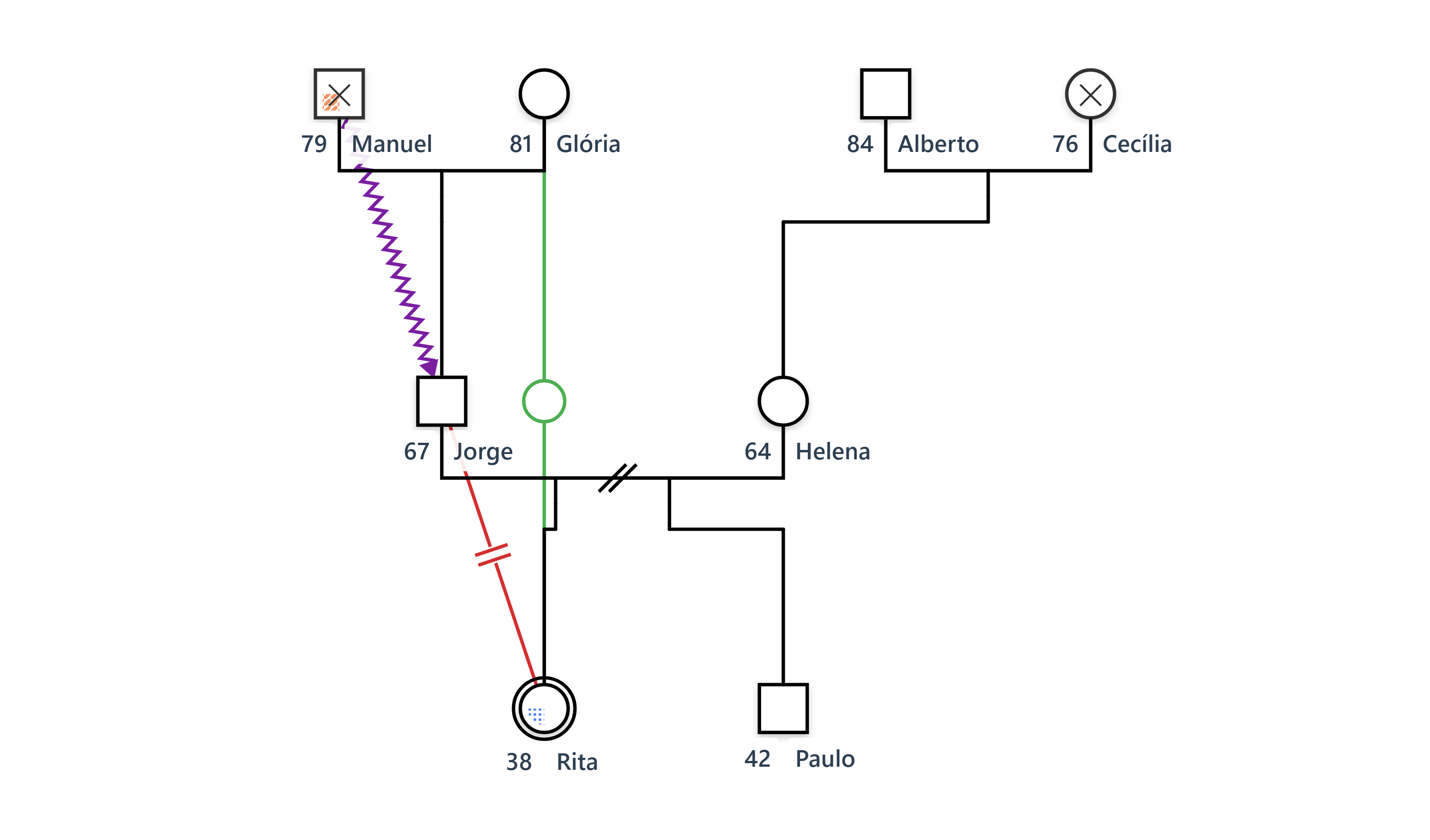
From the map to the target sequence plan
This is where the genogram stops being a pretty intake form and becomes the skeleton of the treatment. In Kitchur's model, once the history is gathered, the EMDR targets are numbered directly on the genogram, in the chronological, developmental order in which they occurred, forming what she calls the Developmental Baseline: the chronological list of trauma targets and developmentally significant targets that guides processing (Kitchur, 2005).
Even outside Kitchur's model, the genogram speaks to the classic target-identification techniques. Monteiro (n.d.) himself connects genogram exploration in Phase 1 to the float-back principle, the technique that follows a present negative cognition back to the touchstone memory that founded it (Holden, n.d.). A well-mapped family history tells you where to look, and at what age.
And there is a deeper reason to look at the whole family rather than only the client: the intergenerational transmission of trauma effects is a documented phenomenon, with epigenetic mechanisms under active investigation (Yehuda & Lehrner, 2018). The genogram is the natural tool for seeing that layer. For those working specifically with trauma and resilience across generations, there is even a dedicated genogram format, the Transgenerational Trauma and Resilience Genogram (Goodman, 2013), which we cover in its own guide.
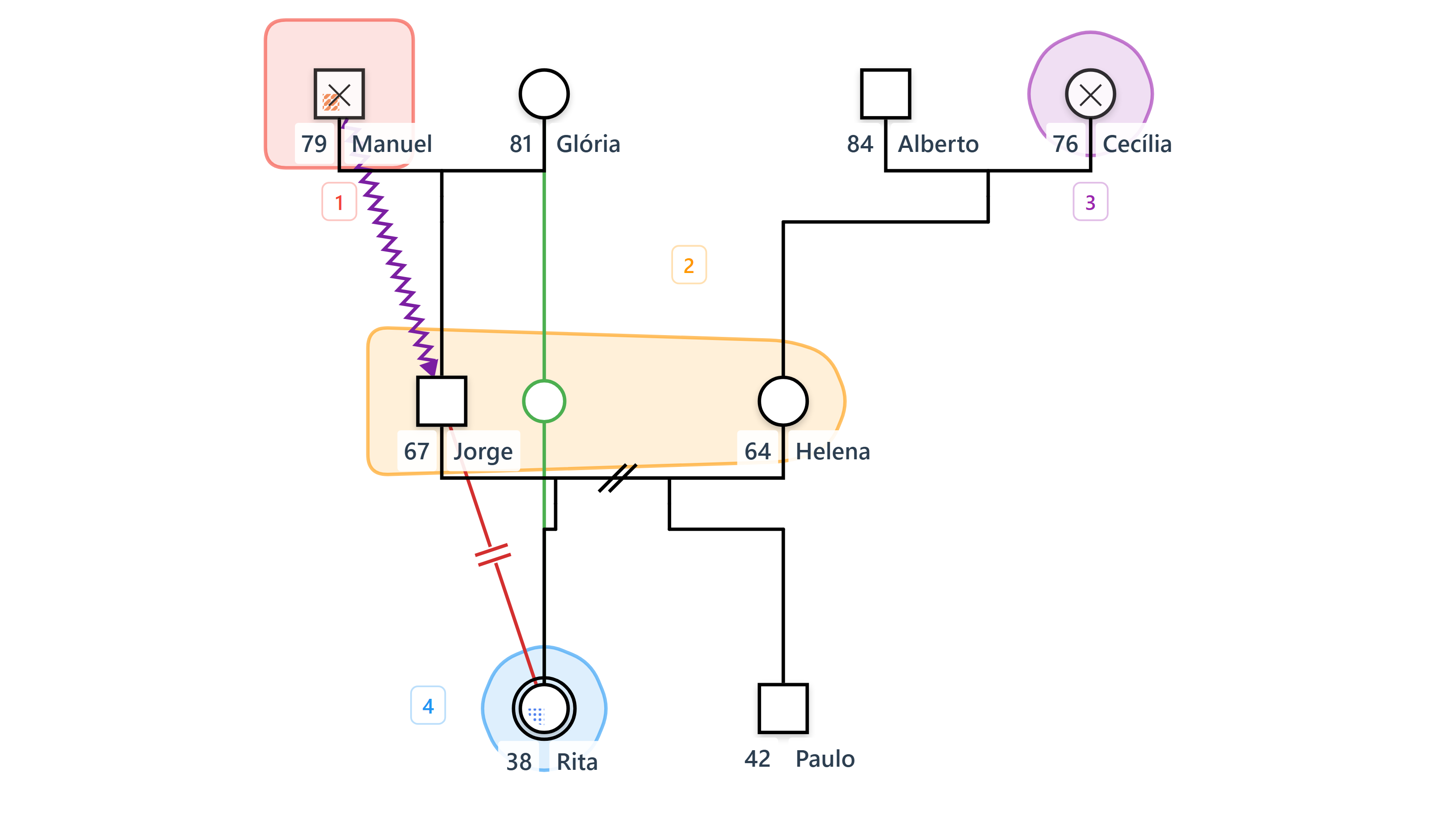
Building the Phase 1 genogram without losing the session
The perennial practical problem: drawing a three-generation genogram by hand takes 15 to 30 minutes by published estimates (Rich et al., 2004), and every new piece of information forces a redraw. In a Phase 1 where you want to be present with your client, not managing paper, that is relationship time lost.
That is exactly the problem WebGeno solves:
- McGoldrick's standard notation, including abuse relationships with the perpetrator-to-victim arrow, emotional cutoffs, and the other relational patterns Phase 1 asks for.
- Visual health conditions (64 built-in, including substance use disorders) for the medical and psychiatric layer of the history.
- Session notes attached to people and relationships, for the details that do not fit in the drawing.
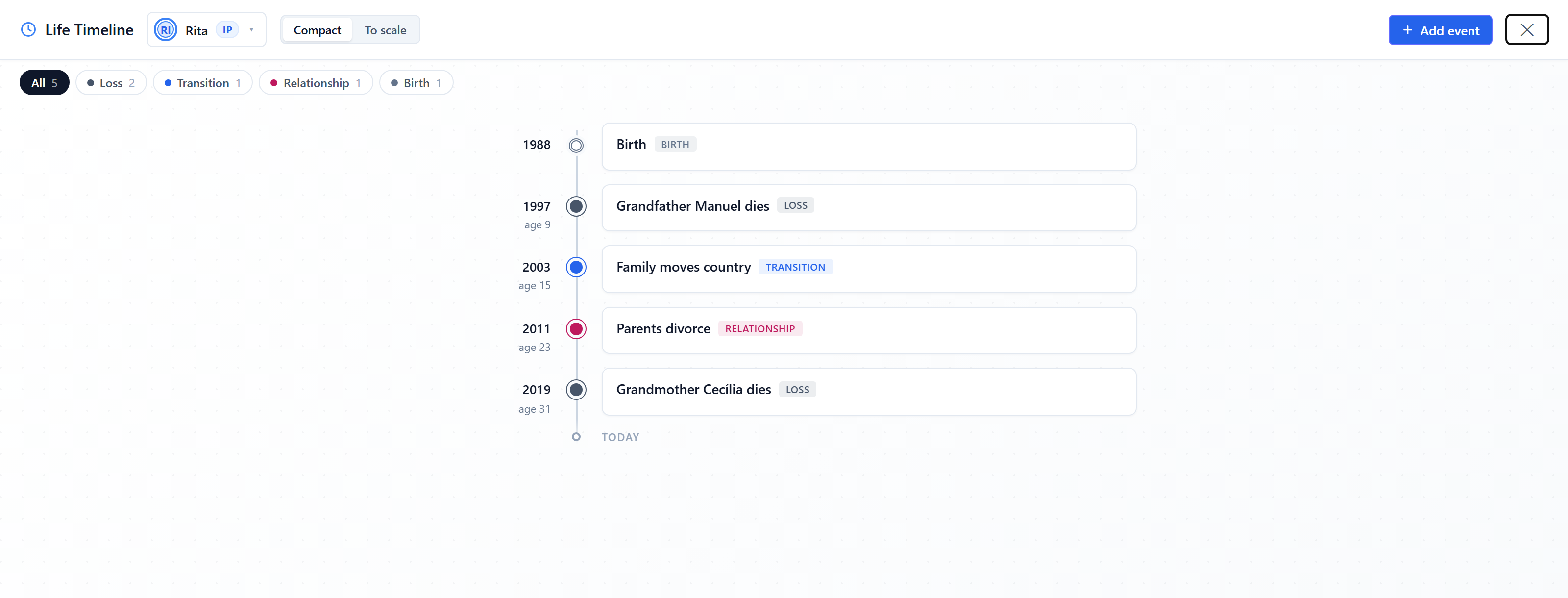
- Life Timeline: the same history on a timeline, the natural companion to a chronological target plan.
- End-to-end encryption: Phase 1 material is sensitive clinical material, and it is treated that way.
Start free, in the browser, nothing to install. The first-session genogram is ready during the first session.
Your next Phase 1, mapped as you talk.
Build the genogram in minutes, with the standard notation your training uses.
Try WebGeno Free →To go deeper
- Kitchur's Strategic Developmental Model chapter in EMDR Solutions (W. W. Norton), and the ISSTD training on the model.
- Shellenberger's chapter in the Handbook of EMDR and Family Therapy Processes (Wiley).
- EMDRIA's workshop on genograms in case conceptualization (Colelli).
- In Portuguese: the Genogram and Transgenerational Trauma courses at Espaço da Mente (Brasília), by the co-founder of the EMDR Association of Brazil.
- On our blog: the complete genogram symbols guide and the transgenerational trauma and resilience genogram.
References
Colelli, G. (2024). Using the genogram for trauma history, case conceptualization and treatment planning [accredited workshop]. EMDR International Association. https://www.emdria.org/event/using-the-genogram-for-trauma-history-case-conceptualization-and-treatment-planning-march-2024/
Goodman, R. D. (2013). The transgenerational trauma and resilience genogram. Counselling Psychology Quarterly, 26(3–4), 386–405. https://doi.org/10.1080/09515070.2013.820172
Holden, S. (n.d.). Floating further back: A dynamic route to the touchstone memory. EMDR Yorkshire. http://www.emdryorkshire.org/resource/Holden-Floating-further-back.pdf
Kitchur, M. (2005). The strategic developmental model for EMDR. In R. Shapiro (Ed.), EMDR solutions: Pathways to healing (pp. 8–56). W. W. Norton. https://wwnorton.com/books/9780393704679
Monteiro, A. M. (n.d.). Transgenerational transmission of trauma [interview]. Psychwire. https://psychwire.com/free-resources/q-and-a/4sryed/transgenerational-transmission-of-trauma
Rich, E. C., Burke, W., Heaton, C. J., Haga, S., Pinsky, L., Short, M. P., & Acheson, L. (2004). Reconsidering the family history in primary care. Journal of General Internal Medicine, 19(3), 273–280. https://doi.org/10.1111/j.1525-1497.2004.30401.x
Shapiro, F. (2001). Eye movement desensitization and reprocessing (EMDR): Basic principles, protocols, and procedures (2nd ed.). Guilford Press.
Shellenberger, S. (2007). Use of the genogram with families for assessment and treatment. In F. Shapiro, F. W. Kaslow, & L. Maxfield (Eds.), Handbook of EMDR and family therapy processes (pp. 76–94). Wiley. https://doi.org/10.1002/9781118269985.ch3
Yehuda, R., & Lehrner, A. (2018). Intergenerational transmission of trauma effects: putative role of epigenetic mechanisms. World Psychiatry, 17(3), 243–257. https://doi.org/10.1002/wps.20568
Build Your Phase 1 Genograms with WebGeno
Create professional genograms with our free genogram maker, using the standard notation your EMDR training expects. For clinical practice, our genogram software for therapists adds encrypted storage, session annotations and the Life Timeline.
Try WebGeno Free