Why Therapists Need Dedicated Genogram Software
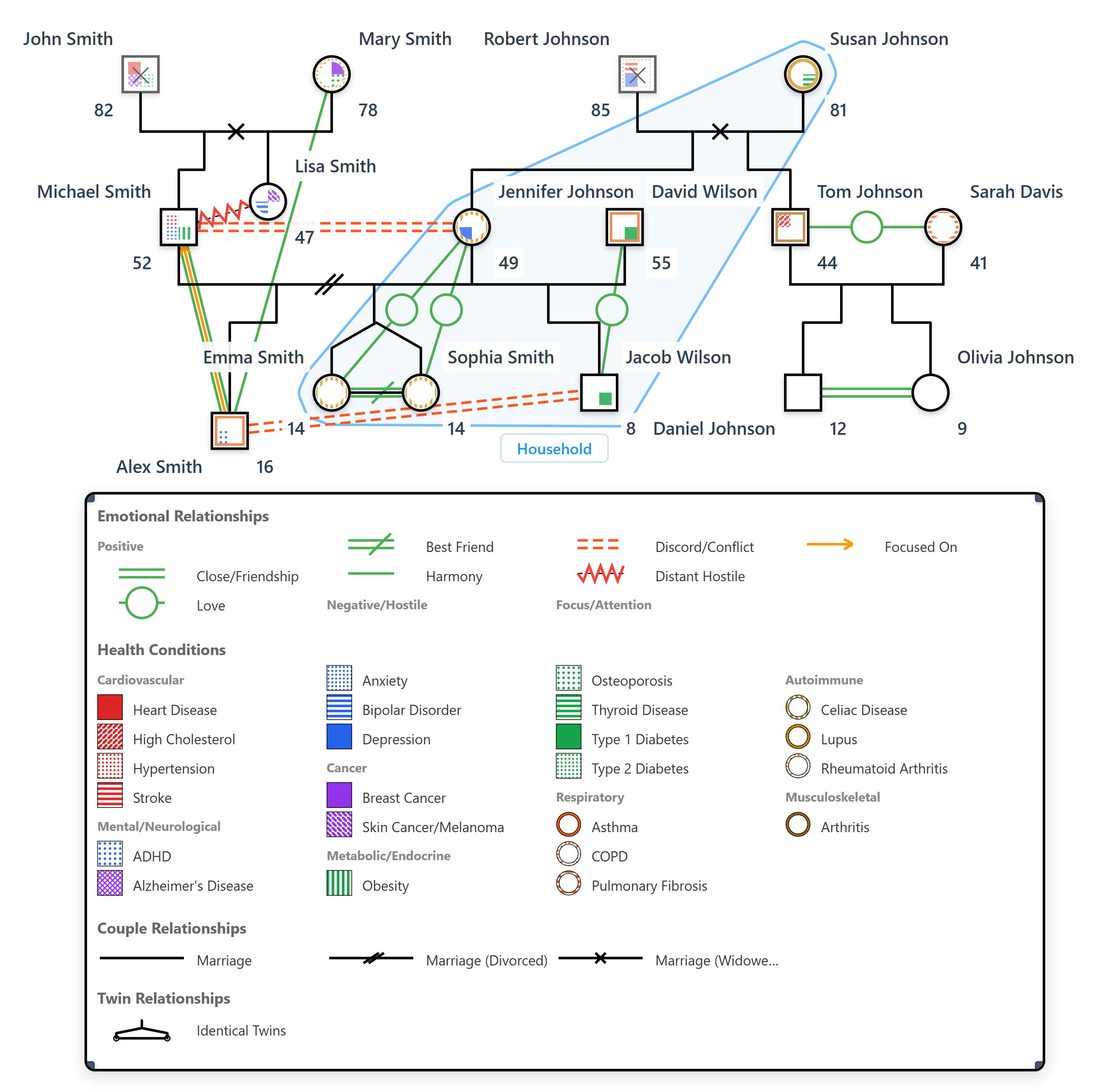
Generic diagramming tools like Canva, Lucidchart, or draw.io can draw boxes and lines — but they don't understand clinical genogram notation. They can't track 64 health conditions across generations, add session annotations, or share encrypted assessments with clients.
WebGeno is purpose-built for mental health professionals. Every feature — from the quadrant-based health conditions system to the encrypted client sharing — was designed for how therapists actually work with families.
- Standard notation follows McGoldrick, Gerson & Petry conventions
- Clinical health tracking 64 conditions with visual patterns
- Session annotations attach notes to any person or relationship
- Privacy-first end-to-end encryption, zero-knowledge cloud
- Client collaboration encrypted sharing and feedback
Clinical Features for Therapy Practice
Every feature designed for how therapists actually work
64 Health Conditions
Cardiovascular, mental health, cancer, metabolic, respiratory, autoimmune — all with distinct visual patterns. Track intergenerational health patterns at a glance.
FreeClinical Annotations
Attach session notes to any person, relationship, or the genogram itself. Categorize as observations, hypotheses, interventions, or follow-ups. Export with numbered references.
FreeEmotional Relationships
30 emotional relationship types: close, enmeshed, distant, cutoff, conflicted, abusive, and more. Visualize the emotional dynamics between any two family members.
FreeEncrypted Client Sharing
Generate secure, time-limited links for clients. Annotations are automatically hidden. Clients can submit encrypted feedback only you can read.
ProAI Genogram Generation
Describe a family system in plain text and let AI build the genogram. Names are automatically anonymized before AI processing — no identifiable data leaves your device.
ProClinical Export
Export to PDF with annotations appendix, PNG for presentations, or SVG for publications. Professional quality for clinical documentation and reports.
ProHow WebGeno Fits Your Therapy Workflow
Intake Session
Build the genogram during your first session. Add family members, relationships, and initial health conditions. The intuitive interface keeps pace with your conversation.
Ongoing Sessions
Add clinical annotations as patterns emerge. Tag notes as observations, hypotheses, or interventions. Click any person to see all related notes.
Client Collaboration
Share the genogram with your client via encrypted link. They can view the family map and submit feedback — all encrypted end-to-end.
Documentation & Reports
Export to PDF with a professional annotations appendix. Include in clinical reports, case presentations, or supervision materials.
WebGeno vs Generic Diagramming Tools
| Clinical Feature |  WebGeno WebGeno |
Canva / Lucidchart / Draw.io |
|---|---|---|
| Standard genogram notation | Built-in | Manual drawing |
| Health conditions tracking | 64 with quadrant system | Not available |
| Emotional relationships | 30 types with standard lines | Generic lines only |
| Clinical annotations | Categorized session notes | Basic text comments |
| Encrypted client sharing | AES-256-GCM E2E | Standard sharing (not encrypted) |
| AI genogram generation | Privacy-first AI | Not available |
| Dynamic legend | Auto-generated | Manual |
| Price for therapists | Free core / $12/mo Pro | $10-15/mo for full features |
Frequently Asked Questions
What genogram software do therapists use?
Therapists use dedicated genogram software like WebGeno that supports clinical notation standards, health conditions tracking, and session annotations. Unlike generic diagramming tools, purpose-built software includes all the clinical features needed for family therapy practice.
Is there free genogram software for therapists?
Yes. WebGeno offers a free tier with unlimited family members, 64 health conditions, all relationship types, clinical annotations, and a dynamic legend. No account required. Pro features are $12/month.
Can I share genograms with therapy clients?
Yes. WebGeno Pro includes encrypted client sharing. Generate a secure, time-limited link. Annotations are automatically removed from the shared copy. Clients can submit encrypted feedback.
Does WebGeno follow standard genogram notation?
Yes. WebGeno follows McGoldrick, Gerson, and Petry's genogram notation standards. All standard symbols for gender, relationships, life status, and emotional dynamics are included. See our symbols reference.
Is client data secure in WebGeno?
Yes. WebGeno uses AES-256-GCM end-to-end encryption for cloud storage — zero-knowledge, meaning not even we can read your data. You can also save files locally for complete offline control.
Can I use WebGeno for clinical training and supervision?
Absolutely. Many training programs use WebGeno for teaching family systems theory. Students get free Professional access. Export genograms for case presentations and supervision materials.
Start Using Professional Genogram Software
Free forever for core features. No account required. Built for therapists.
Also built for social workers and psychology students