
Genograms are standard equipment in family therapy training, family medicine, social work and educational psychology. The evidence on whether they do what they are credited with doing is considerably harder to find than the enthusiasm for them. What follows is four decades of that research: what has been demonstrated, what has not, and what each of those follows through to in practice.
One genogram runs through the article as a worked example. The Silva family is fictional, invented for the purpose: a real genogram carries confidential information and does not belong outside the clinical context.
1. The wrong question (and the right one)
Monica McGoldrick, who standardized the format, defines the genogram as "a graphic way of organizing the mass of information gathered during a family assessment" (McGoldrick et al., 2020). The definition claims nothing beyond that. It is not a test, a measure or a diagnostic instrument.
The history is consistent with the definition. The word "genogram" first appeared in the literature in 1972, coined by Philip Guerin, a student of Murray Bowen, for the three-generation diagram Bowen had been using since the 1950s (Butler, 2008). The graphic format was only standardized in the 1980s by a committee and presented by McGoldrick and Gerson in 1985; before that, every professional drew families their own way and nobody could read anyone else's diagrams (Wendt & Crepaldi, 2008).
The genogram was built as a map and is best judged as one. "Is the genogram valid?" is close to asking whether a map is true; the answerable question is whether the assessment process built around it is rigorous.
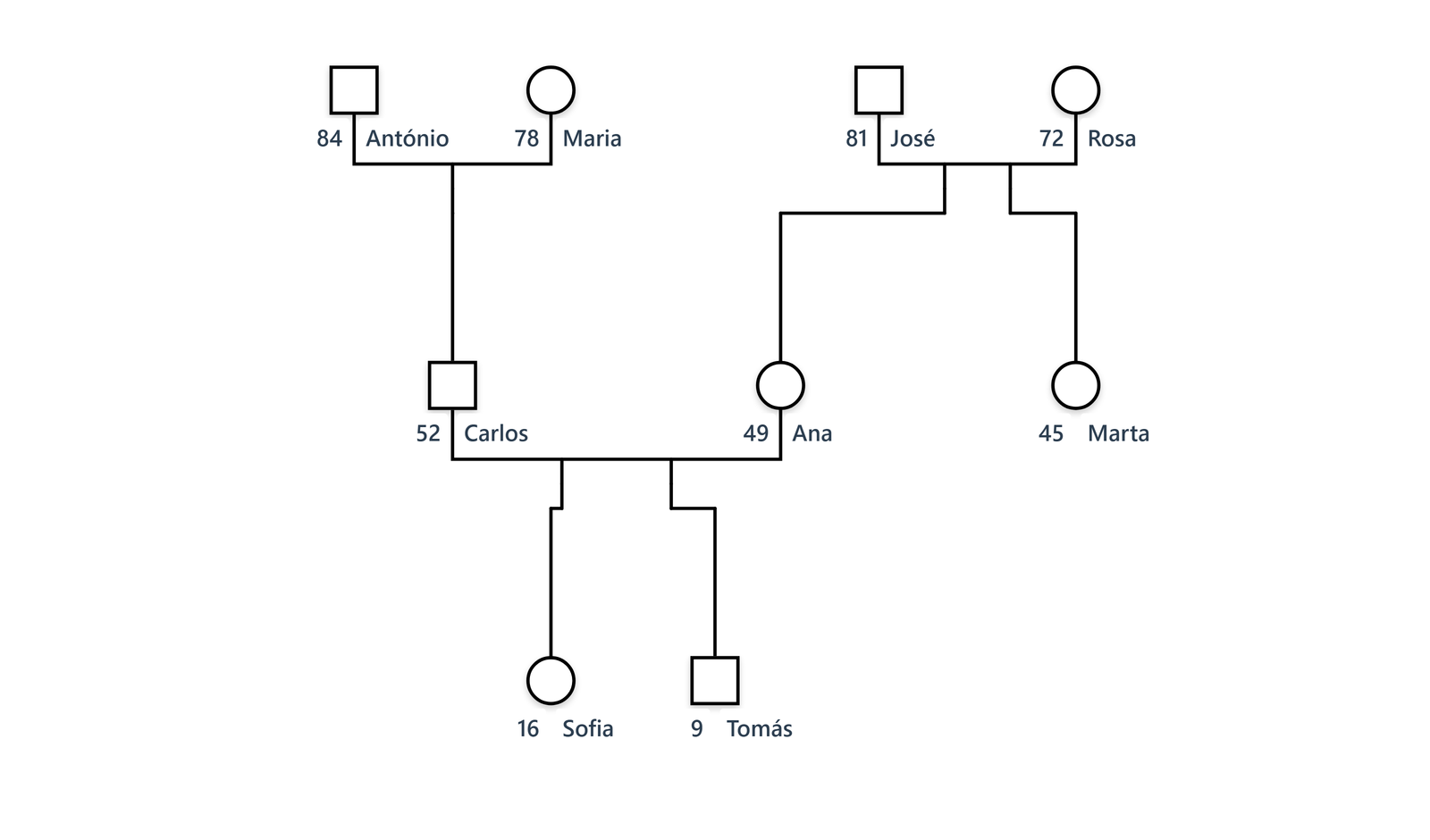
2. What is well demonstrated
The psychometric research on genograms is small but consistent on one point: structured information gathering replicates well.
- A standardized genogram interview protocol, the Family Genogram Interview, reached roughly 95% agreement between different interviewers with the same person (Platt & Skowron, 2013).
- The self-administered genogram (SAGE) showed 89.7% test-retest stability over three months (Rogers & Holloway, 1990).
- Two experienced family therapists classifying relational patterns on the same genograms agreed in 88% to 100% of cases (Wendt & Crepaldi, 2008).
The genogram also delivers on its information claim: in the only randomized controlled trial run on genograms, those administered at first visits documented more information about family structure, life events, repetitive illnesses and relationships than physicians managed on their own (Rogers & Cohn, 1987). Practitioners describe the same effect in different terms: the drawing holds a "gestalt" that surfaces patterns faster than conversation alone (Newbury, 2019).
The same research carries a qualification. In the SAGE study, reliability was not uniform: names and occupations replicated at 97%, but parents' and grandparents' ages only at 50 to 55%, and information degraded with each generation of distance (100% for the respondent, 85% for parents, 75% for grandparents). Family memory is an imperfect informant, and authorities in genetics recommend confirming critical data against records before acting on it (Rich et al., 2004).
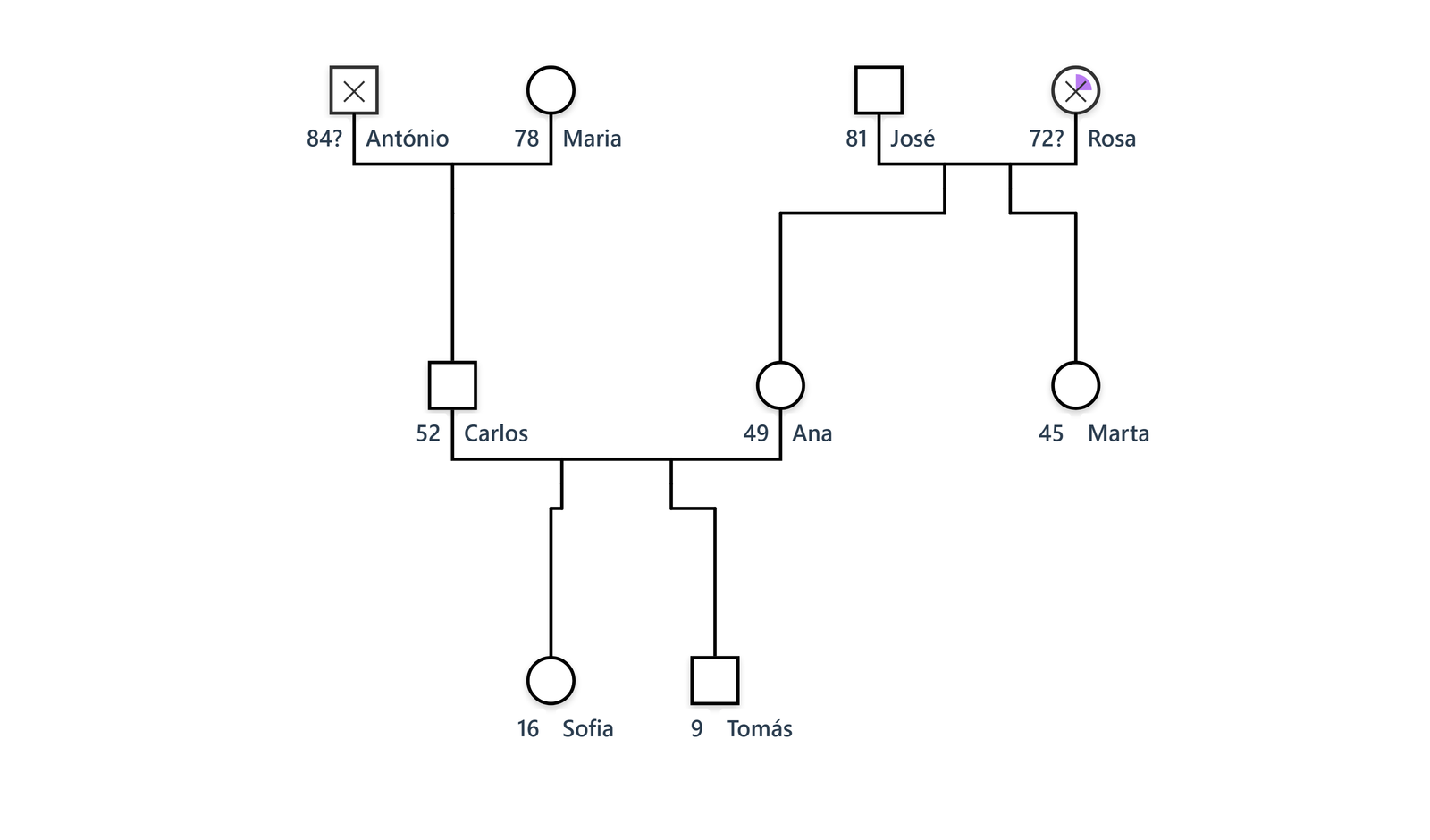
3. What is not demonstrated
Therapeutic effectiveness: the most recent literature review searched five international databases and found only 18 eligible studies on genograms, of which just 2 were intervention studies, and none was specific to the family-therapy setting (Joseph et al., 2023). No study has ever compared the genogram's effectiveness against any other therapeutic tool.
Predictive validity: in a study from the early 1990s, six physicians with genogram expertise tried to predict real patients' health events over three months. Predictions made with genograms were no more accurate than predictions made from a plain chart review, and no expert predicted above chance level (Rogers et al., 1992). Monica McGoldrick is a co-author of that paper. The disconfirming result was published by the tradition that developed the instrument.
This is the ordinary evidentiary status of a qualitative clinical technique, and it carries one direct consequence: a genogram predicts nothing and concludes nothing on its own.
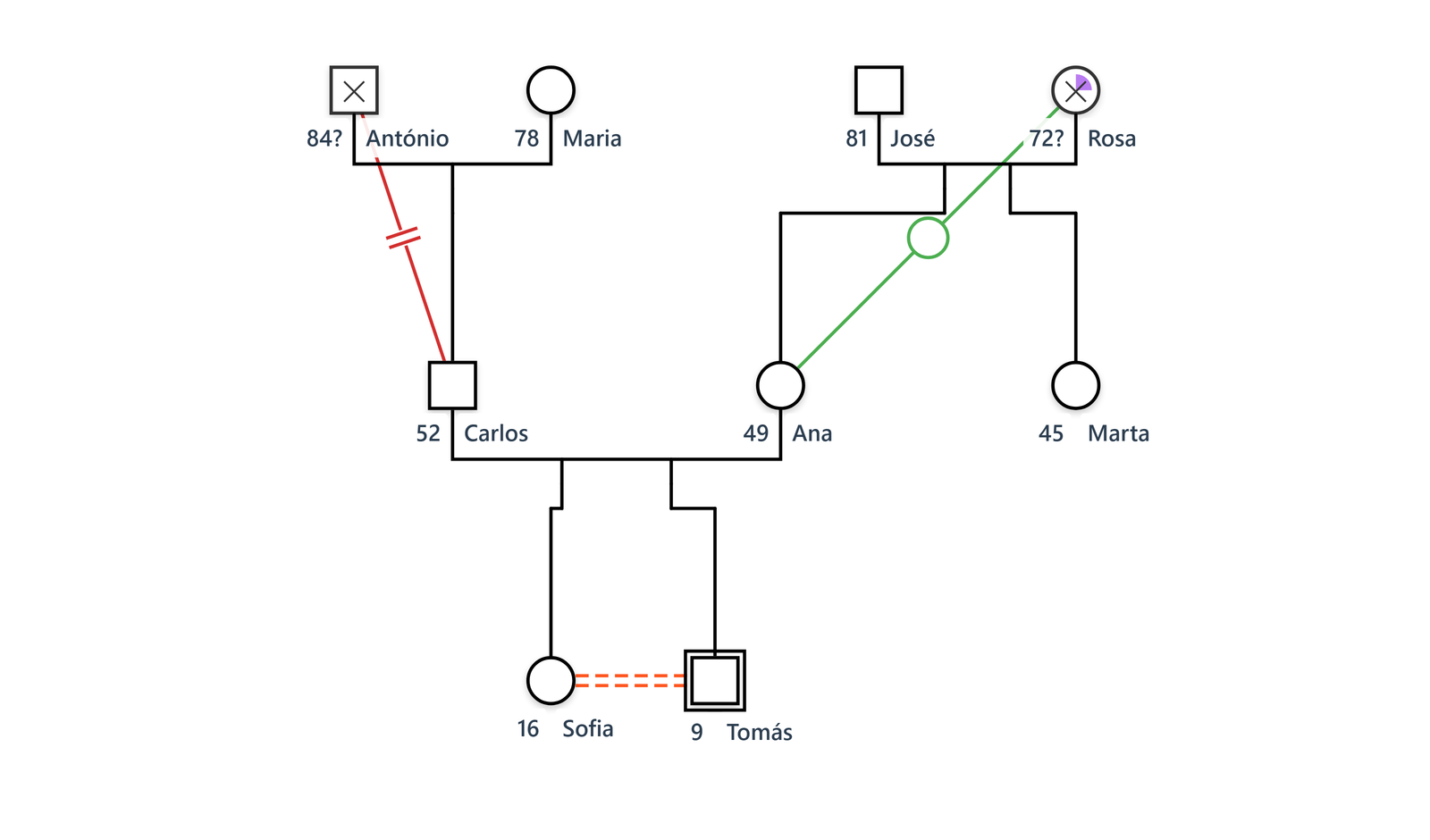
4. How experts read the same genogram
The same research group turned to how experts read genograms. Twelve experienced clinicians read the genograms of the same 58 patients. The result splits in two (Rohrbaugh et al., 1992):
- In the abstract, they agree. On which categories of information matter in general (medical conditions, household composition, life-cycle transitions, cross-generational patterns), agreement was high.
- On the concrete case, they disagree. Facing the same genogram, what each expert considered important varied so much that correlations between judges all fell below .45. The authors' explanation: how a genogram is read depends on the reader's theory. In their words, "family genograms are fundamentally different from X-rays."
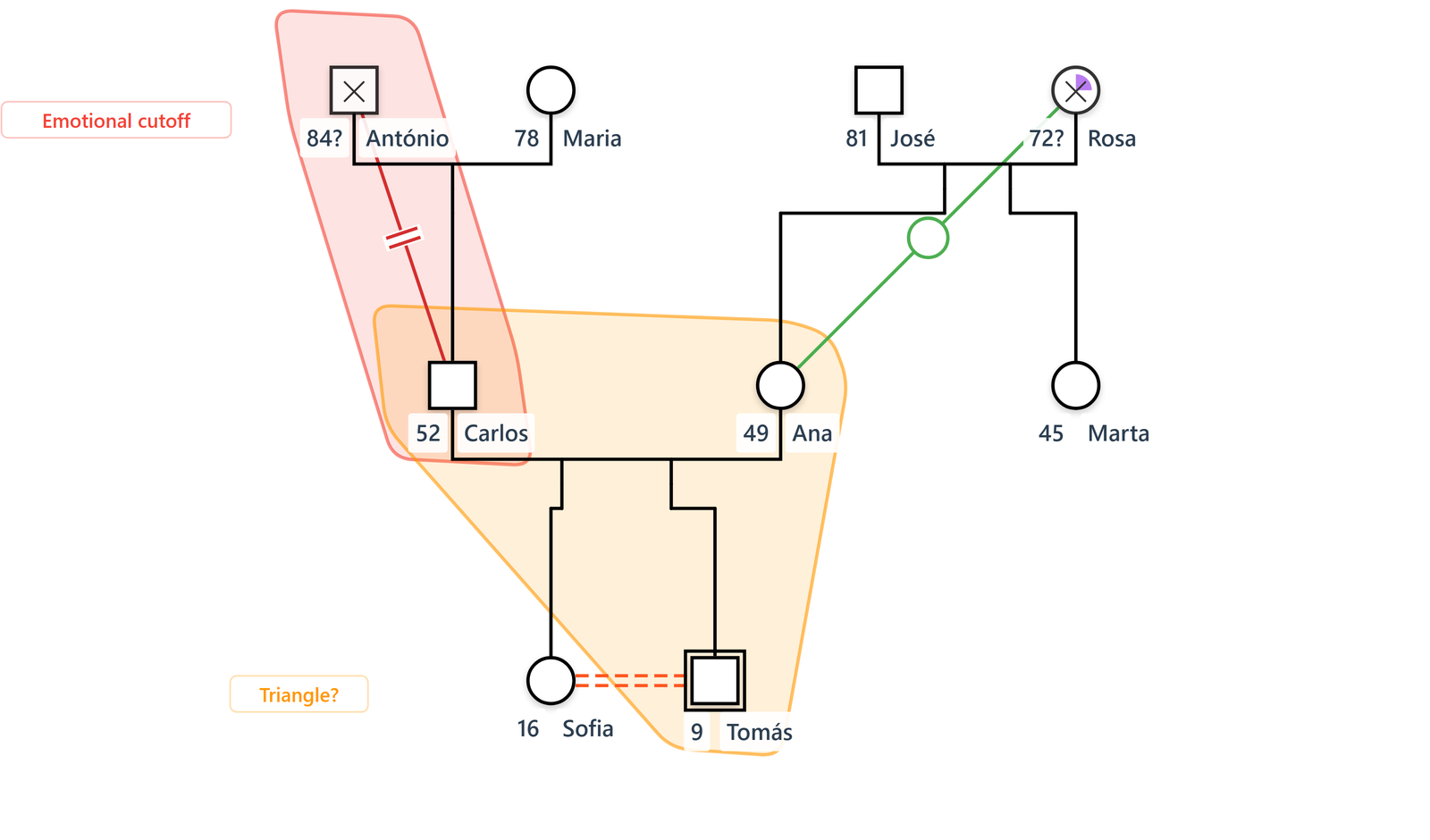
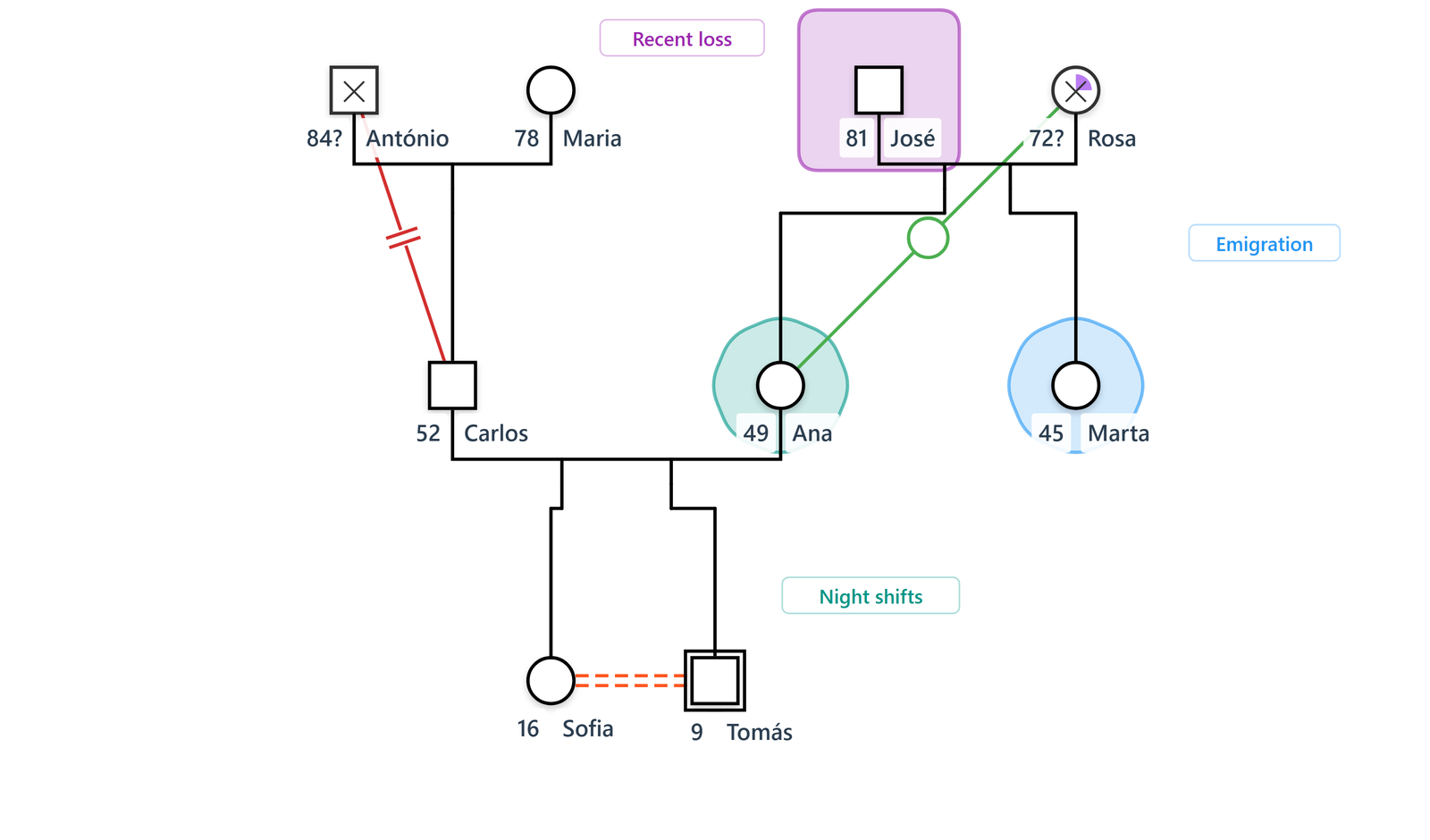
One genogram, two competent readings, neither of them wrong and neither of them demonstrated. Correlations between judges fell below .45 (Rohrbaugh et al., 1992).
The finding translates directly into practice: what a genogram shows are hypotheses, not conclusions. The two readings above are openings for conversation with the Silva family, not findings about them.
5. The practices the evidence supports
Taken together, the literature does not argue against using genograms. It describes the conditions under which they hold up:
- The clinical interview comes first. The genogram organizes a conversation; it does not replace one (Burd & Baptista, 2004, as cited in Lins et al., 2016). In our example, the cutoff line between Carlos and António was only drawn after Carlos talked about his father, not deduced from the drawing.
- Structured administration by trained clinicians. All the high reliability in section 2 came from standardized protocols and trained administrators. Lack of training is the number-one limitation practitioners themselves report (Newbury, 2019; Penteado, 2025).
- Hypothesis, never verdict. Recording separately what the genogram shows and what the clinician infers is Rohrbaugh and colleagues' explicit recommendation for making genogram reading more reliable.
- Confirm critical facts. When a piece of genogram information carries weight in a decision, confirm it with other relatives or records (Rich et al., 2004). The "?" on the grandfather's age records the uncertainty rather than absorbing it.
- More than one snapshot. The genogram is static and the family is not; the literature recommends two or more genograms over time to capture change (Wendt & Crepaldi, 2008; Mello et al., 2005).
- Adapt the notation to the real family. The standard format assumes nuclear, biological, Western families; significant people who don't fit that grid become invisible unless we are deliberate (Hardy & Laszloffy, 1995; Alexander et al., 2022). The Silvas have Lurdes, Tomás's godmother and a daily presence in the home: she is not "family" in classic notation, which is precisely the reason to draw her.
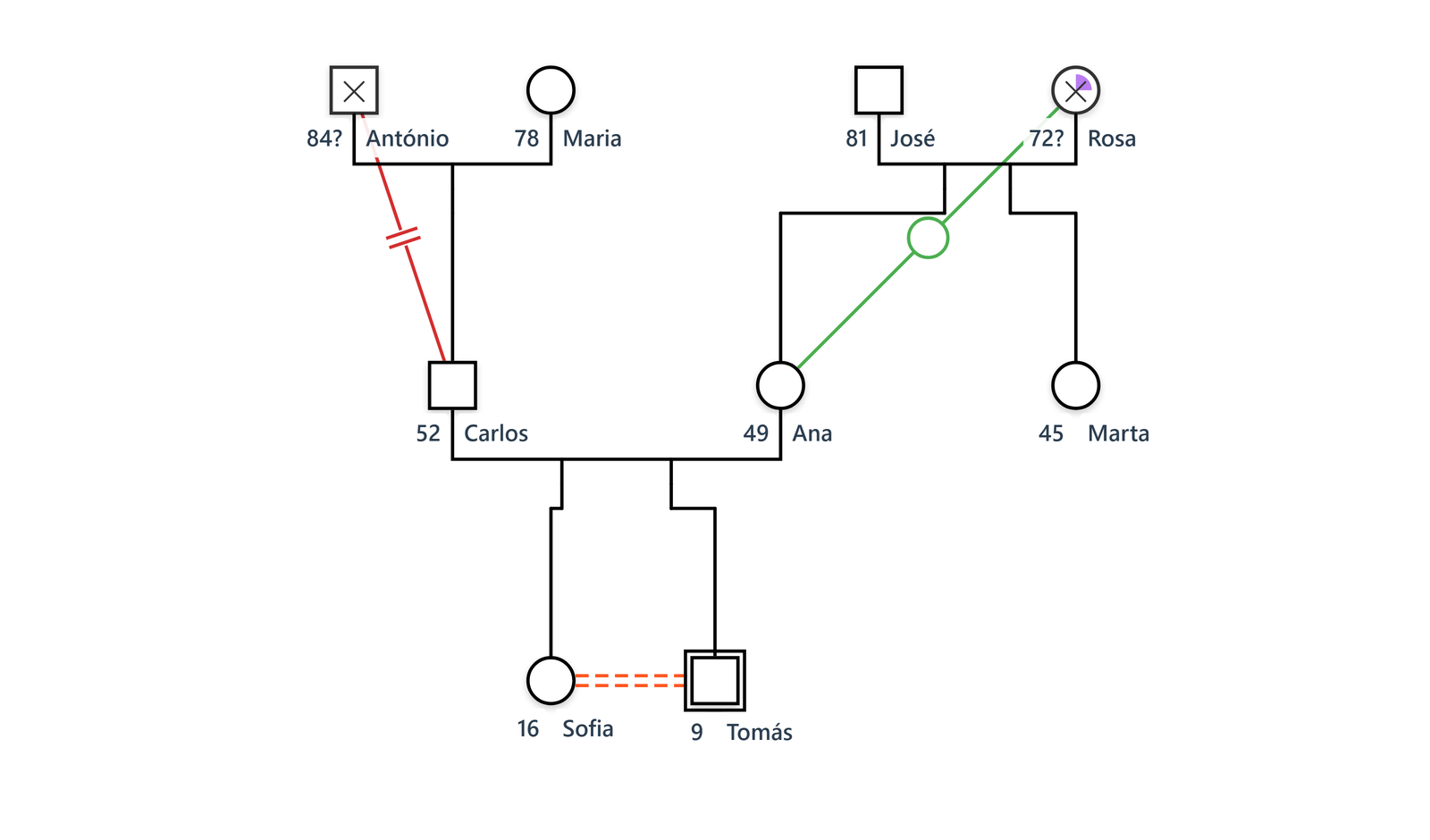
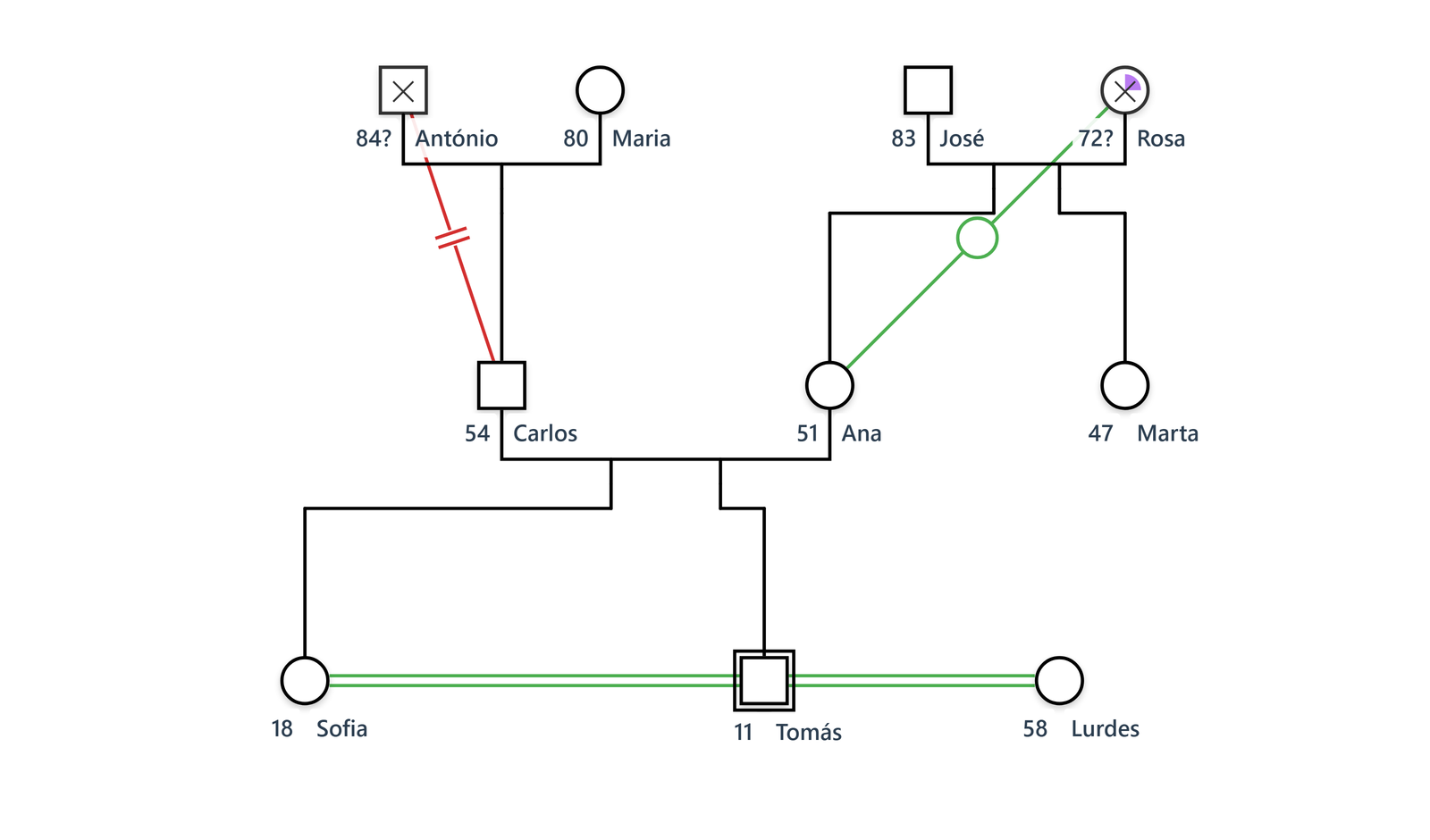
Practices 5 and 6: the second snapshot records the change, and Lurdes appears because the family placed her there, not because the notation anticipated her.
6. Why genograms appear in only 11% of charts
If the technique is useful and the conditions for using it well are known, the uptake needs explaining. A direct-observation study in family medicine found genograms in only 11% of patient charts, despite decades of recommendation (Rich et al., 2004). The documented barriers are not doubts about value: they are the 15 to 30 minutes it takes to build a three-generation genogram by hand, fragmented documentation, and redrawing the whole thing every time the family changes.
That, and not skepticism about the method, is what software addresses. A tool like WebGeno brings construction down to minutes using McGoldrick's standardized notation, and turns redrawing (a baby is born, a divorce happens, a health condition emerges) into a few seconds of editing. What software does not do is interpret the map. On the evidence above, that part remains irreducibly clinical.
Every image in this article was built in WebGeno.
Open the Silva family in your browser and work through it. Free, no signup needed.
Open the Silva Family →7. A map of better questions
The Silva genogram is complete. It does not say why Tomás sleeps badly. It indicates where it is worth asking: the grandfather's death, the mother's night shifts, the sister who just left home, the pattern of losses on the maternal side. Forty years of research support exactly this use: a standardized, replicable method of collecting and organizing family history, one that generates richer and faster hypotheses than conversation alone, and whose interpretation belongs to the clinician and the family, not to the drawing.
A genogram built through a structured process and read as a source of hypotheses is not an unvalidated instrument being used on faith. It is the use the literature has described since 1985.
References
Alexander, J. H., Callaghan, J. E. M., & Fellin, L. C. (2022). Genograms in research: Participants' reflections of the genogram process. Qualitative Research in Psychology, 19(1), 91–111. https://doi.org/10.1080/14780887.2018.1545066
Butler, J. F. (2008). The family diagram and genogram: Comparisons and contrasts. The American Journal of Family Therapy, 36(3), 169–180. https://doi.org/10.1080/01926180701291055
Hardy, K. V., & Laszloffy, T. A. (1995). The cultural genogram: Key to training culturally competent family therapists. Journal of Marital and Family Therapy, 21(3), 227–237. https://doi.org/10.1111/j.1752-0606.1995.tb00158.x
Joseph, B., Dickenson, S., McCall, A., & Roga, E. (2023). Exploring the therapeutic effectiveness of genograms in family therapy: A literature review. The Family Journal, 31(1), 21–30. https://doi.org/10.1177/10664807221104133
Kerr, M. E., & Bowen, M. (1988). Family evaluation: An approach based on Bowen theory. W. W. Norton.
Lins, D. R. T., Santos, N. F., Santos, R. C. L., & Moura, G. C. (2016). Avaliação inter e transgeracional da família. Cadernos de Graduação: Ciências Humanas e Sociais, 3(2), 61–72.
McGoldrick, M., Gerson, R., & Petry, S. (2020). Genograms: Assessment and treatment (4th ed.). W. W. Norton.
Mello, D. F., Vieira, C. S., Simpionato, É., Biasoli-Alves, Z. M. M., & Nascimento, L. C. (2005). Genograma e ecomapa: Possibilidades de utilização na estratégia de saúde da família. Revista Brasileira de Crescimento e Desenvolvimento Humano, 15(1), 78–88.
Newbury, K. (2019). A picture is worth a thousand words: The strengths and limitations of genograms in educational psychology practice [Doctoral thesis, Tavistock and Portman NHS Trust / University of Essex]. Essex Research Repository. https://repository.essex.ac.uk/25186/
Penteado, P. A. (2025). Genograma e atenção primária à saúde. Revista Brasileira de Medicina de Família e Comunidade, 20(47), Article 4621. https://doi.org/10.5712/rbmfc20(47)4621
Platt, L. F., & Skowron, E. A. (2013). The Family Genogram Interview: Reliability and validity of a new interview protocol. The Family Journal, 21(1), 35–45. https://doi.org/10.1177/1066480712456817
Rich, E. C., Burke, W., Heaton, C. J., Haga, S., Pinsky, L., Short, M. P., & Acheson, L. (2004). Reconsidering the family history in primary care. Journal of General Internal Medicine, 19(3), 273–280. https://doi.org/10.1111/j.1525-1497.2004.30401.x
Rogers, J., & Holloway, R. (1990). Completion rate and reliability of the self-administered genogram (SAGE). Family Practice, 7(2), 149–151. https://doi.org/10.1093/fampra/7.2.149
Rogers, J. C., & Cohn, P. (1987). Impact of a screening family genogram on first encounters in primary care. Family Practice, 4(4), 291–301. https://doi.org/10.1093/fampra/4.4.291
Rogers, J. C., Rohrbaugh, M., & McGoldrick, M. (1992). Can experts predict health risk from family genograms? Family Medicine, 24(3), 209–215.
Rohrbaugh, M., Rogers, J. C., & McGoldrick, M. (1992). How do experts read family genograms? Family Systems Medicine, 10(1), 79–89. https://doi.org/10.1037/h0089325
Wendt, N. C., & Crepaldi, M. A. (2008). A utilização do genograma como instrumento de coleta de dados na pesquisa qualitativa. Psicologia: Reflexão e Crítica, 21(2), 302–310. https://doi.org/10.1590/S0102-79722008000200016
Build Your Genograms with WebGeno
Create professional family diagrams with our free genogram maker, using McGoldrick's standardized notation. For clinical practice, our genogram software for therapists adds encrypted client sharing, session annotations and PDF export. New to the notation? Start with the complete genogram symbols guide.
Try WebGeno Free